

Just wrapping up another great week at Practical Board Repair with Jessa Jones and Louis Rossmann.
This week we had students from all over the US, Bermuda, Barbados, Canada, and even Amsterdam, the Netherlands.
As usual we had a lot of fun, lots of hilarious slogan suggestions for new course T-shirts, and as usual the progress the students made throughout the week was amazing.
We started the week by developing technical proficiency and getting familiar with the equipment. Students completed:
A Samsung galaxy charge port, and learned to make microjumpers for pulled pads
Placed a digitizer connector on an iPhone 5s,
Built an iPad mini digitizer assembly.
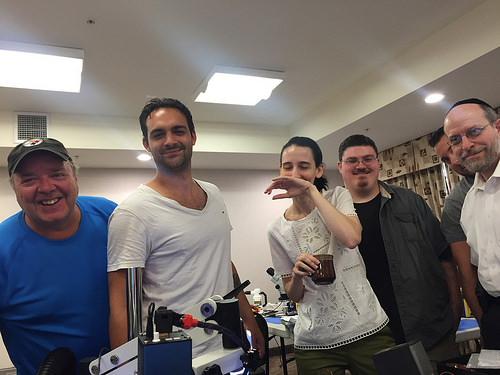
We hit the schematics on day 2 and covered:
Small component parts sourcing,
How to orient connectors on the schematic
Types and functions of basic components
How to use the multimeter
How to read the board itself
In depth analysis of the common backlight circuits on iDevices and how to troubleshoot them.
Everybody performed a backlight filter replacement on iPad mini
iPad mini digitizer connector replacement and continuing technical proficiency skills work.
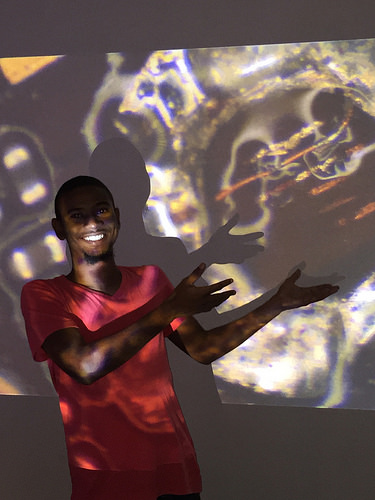
Day 3 marks the turn of the course toward more complex problems and efficient diagnosis
The business standpoint: How to translate your skills into profit for board repair
Professional water damage recovery--trying out the Crest ultrasonic cleaner
iPhone shield removal
How to use the DC power supply to force charge a dead battery
Short detection with FLIR camera, alcohol method, freeze spray
iPhone 5s trace repair
Lecture and cheatsheet to learn to instantly recognize the source of common device failures for iPhone/iPad
How to address no power, no charge, no backlight, no image
U2 tristar chip
Recognizing rabbit holes--what are the limits of what we can do
Data recovery from a hardware perspective
More electronics theory--the hows and whys of component failure
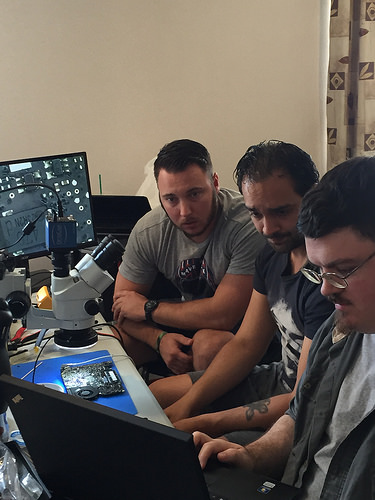
Day 4 moves us into advanced schematics and open-ended troubleshooting
Recognizing and understanding how the basic components interact to form the common circuits
DC/DC boost circuit
Current sensing circuit
Buck converters
MacBook Sys onewire circuit
How to measure and address open-ended problems
Technical proficiency for bga--the MacBook LED driver
Working together through an open-ended MacBook problem
Applying new skills to the problem boards students brought from home
And the course classic--Louis sets a board on fire
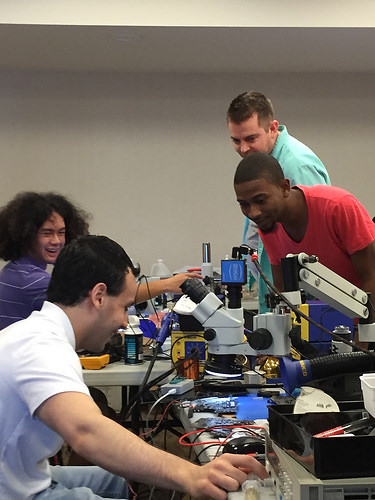
Day 5 was all about practical application of skills and technique refinement
Small group work to figure out MacBook boards with open-ended problems
Continued work on problem boards from home with instructor support
Real-life examples of customer problems right off the iPad Rehab incoming device queue
Graduation and T-shirts!
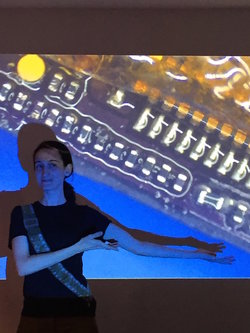
After hours, the group met informally for dinner and drinks, and lots of great information was shared.
The end of the week comes too quickly, but all graduates can join the Practical Board Repair alumni Facebook group. I love to see the memories being made and especially the proud pictures of the successful work produced back at home. We will see each other again at CTIA or eReuse conferences, or maybe an alumni advanced course in the future.